Brenda Iijima, Mark Lamoureux & Morgan Lucas Schuldt
Saturday, December 15th, 8 PM
Unnameable Books
456 Bergen Street, Brooklyn
Morgan Lucas Schuldt
author of
Verge Free Verse Editions (2007)
& editor of
Cue: A Journal of Prose Poetry
Brenda Iijima
author of
Animate, Inanimate Aims Litmus Press (2007)
& editor of
Portable Press at Yo Yo Labs
Mark Lamoureux
author of
Astrometry Organon Spuyten Duyvil (forthcoming)
& editor of
Cy Gist Press
Hosted by The Burning Chair Readings & Cannibal Books.
BYOB. We will bring some, too.
Thursday, December 13, 2007
Tuesday, November 27, 2007
Friday, November 30th ~ Maureen Alsop & Jean Valentine ~ NYC
The Burning Chair Readings
can’t believe it’s
Maureen Alsop & Jean Valentine
Friday, November 30th, 8PM
Jimmy’s No.43 Stage
43 East 7th Street
Between 2nd& 3rd
New York City
 Maureen Alsop’s recent poems have appeared or are pending in various publications including: Barrow Street, Typo, Margie, Columbia : A Journal of Literature and Art and Texas Review. Her poetry was three times nominated for the Pushcart Prize. She is the 2006 recipient of Harpur Palate's Milton Kessler Memorial Prize for Poetry and The Eleventh Muse 2006 poetry prize. Her first full collection of poetry Apparition Wren is available through Main Street Rag. ~ Two poems in Typo 10.
 Jean Valentine won the Yale Younger Poets Award for her first book, Dream Barker, in 1965. Her most recent collection, Door in the Mountain: New and Collected Poems 1965 - 2003, won the 2004 National Book Award for Poetry. Author of eight additional books, Valentine has received a Guggenheim Fellowship and awards from the NEA, The Bunting Institute, The Rockefeller Foundation, The New York Council for the Arts, and The New York Foundation for the Arts, as well as the Maurice English Prize, the Teasdale Poetry Prize, and The Poetry Society of America's Shelley Memorial Prize. She has taught at Columbia, Sarah Lawrence College, NYU, and the 92nd St. Y, among other places. ~ Jean Valentine.com featuring audio recordings of poems from Door in the Mountain.
typomag.com/burningchair
jimmysno43.com

can’t believe it’s
Maureen Alsop & Jean Valentine
Friday, November 30th, 8PM
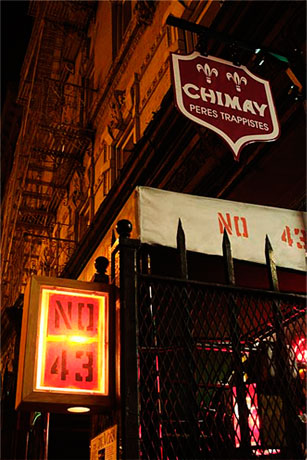
Jimmy’s No.43 Stage
43 East 7th Street
Between 2nd& 3rd
New York City
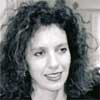 Maureen Alsop’s recent poems have appeared or are pending in various publications including: Barrow Street, Typo, Margie, Columbia : A Journal of Literature and Art and Texas Review. Her poetry was three times nominated for the Pushcart Prize. She is the 2006 recipient of Harpur Palate's Milton Kessler Memorial Prize for Poetry and The Eleventh Muse 2006 poetry prize. Her first full collection of poetry Apparition Wren is available through Main Street Rag. ~ Two poems in Typo 10.
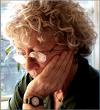 Jean Valentine won the Yale Younger Poets Award for her first book, Dream Barker, in 1965. Her most recent collection, Door in the Mountain: New and Collected Poems 1965 - 2003, won the 2004 National Book Award for Poetry. Author of eight additional books, Valentine has received a Guggenheim Fellowship and awards from the NEA, The Bunting Institute, The Rockefeller Foundation, The New York Council for the Arts, and The New York Foundation for the Arts, as well as the Maurice English Prize, the Teasdale Poetry Prize, and The Poetry Society of America's Shelley Memorial Prize. She has taught at Columbia, Sarah Lawrence College, NYU, and the 92nd St. Y, among other places. ~ Jean Valentine.com featuring audio recordings of poems from Door in the Mountain.
typomag.com/burningchair
jimmysno43.com
Thursday, November 22, 2007
Tuesday, November 06, 2007
Paige Ackerson-Kiely, Lily Brown & Elizabeth Robinson
Friday, November 16th, 7:30 PM
The Fall Café
307 Smith Street
btwn. Union & President
Carroll Gardens, Brooklyn
F/G to Carroll Street
Paige Ackerson-Kiely was born in October of 1975 at the behest of her parents in Biddeford, Maine. Her first book, In No One's Land won the 2006 Sawtooth Poetry Prize. She currently resides in Vermont, where she is employed selling wine, and is at work on a second manuscript of poems entitled My Love is a Dead Arctic Explorer, and a novel about infanticide.
Lily Brown holds an MFA from Saint Mary's College and currently lives in San Francisco. Her poems have been published or are forthcoming in Typo, Octopus, Fence, Cannibal, Tarpaulin Sky, Handsome and Coconut. Octopus Books published her chapbook, The Renaissance Sheet, in early 2007.
Elizabeth Robinson is the author of 8 books of poetry, most recently Under That Silky Roof (Burning Deck Press) and Apostrophe (Apogee Press). The Orphan and its Relations is forthcoming from Fence Books in 2008. Robinson co-edits EtherDome Press and Instance Books and lives in Boulder, Colorado.
The Fall Café
307 Smith Street
btwn. Union & President
Carroll Gardens, Brooklyn
F/G to Carroll Street
Paige Ackerson-Kiely was born in October of 1975 at the behest of her parents in Biddeford, Maine. Her first book, In No One's Land won the 2006 Sawtooth Poetry Prize. She currently resides in Vermont, where she is employed selling wine, and is at work on a second manuscript of poems entitled My Love is a Dead Arctic Explorer, and a novel about infanticide.
Lily Brown holds an MFA from Saint Mary's College and currently lives in San Francisco. Her poems have been published or are forthcoming in Typo, Octopus, Fence, Cannibal, Tarpaulin Sky, Handsome and Coconut. Octopus Books published her chapbook, The Renaissance Sheet, in early 2007.
Elizabeth Robinson is the author of 8 books of poetry, most recently Under That Silky Roof (Burning Deck Press) and Apostrophe (Apogee Press). The Orphan and its Relations is forthcoming from Fence Books in 2008. Robinson co-edits EtherDome Press and Instance Books and lives in Boulder, Colorado.
Tuesday, October 30, 2007
Unnameable Cannibal Kitchen
Kitchen Press & Cannibal Books
invite you to eat from the chopping block
w/
Erin Elizabeth Burke Run Down the Emphasis (Kitchen)
Thibault Raoult I’ll Say I’m Only Visiting (Cannibal)
Mathias Svalina Why I Am White (Kitchen)
Friday, November 2nd, 8 PM
Unnameable Books
456 Bergen Street
btwn. 5th & Flatbush
Refreshments served, but you may also BYOB.
Kitchen Press and Cannibal Books products will be available for consumption.
Unnameable Books carries an excellent selection of poetry from independent presses.
This event is free for all.
unnameablebooks.net
kitchenpresschapbooks.blogspot.com
flesheatingpoems.blogspot.com
invite you to eat from the chopping block
w/
Erin Elizabeth Burke Run Down the Emphasis (Kitchen)
Thibault Raoult I’ll Say I’m Only Visiting (Cannibal)
Mathias Svalina Why I Am White (Kitchen)
Friday, November 2nd, 8 PM
Unnameable Books
456 Bergen Street
btwn. 5th & Flatbush
Refreshments served, but you may also BYOB.
Kitchen Press and Cannibal Books products will be available for consumption.
Unnameable Books carries an excellent selection of poetry from independent presses.
This event is free for all.
unnameablebooks.net
kitchenpresschapbooks.blogspot.com
flesheatingpoems.blogspot.com
Monday, October 08, 2007
Fri 10/12 w/ Joseph Bradshaw & Ken Rumble @ The Fall Café
The Burning Chair Readings
believe that anything is possible w/
Joseph Bradshaw & Ken Rumble
Friday, October 12th, 7:30 PM
The Fall Café
307 Smith Street
btwn. Union & President
Carroll Gardens, Brooklyn
F/G to Carroll Street
Joseph Bradshaw was born in Caldwell, Idaho, and grew up up and down the west coast. From 2002 to 2006 he co-edited FO(A)RM Magazine and co-curated the Spare Room reading series in Portland. A chapbook, The Way Birds Become, was recently published by Weather Press. His poetry and reviews can be found in current or forthcoming issues of Cannibal, Cultural Society, Denver Quarterly, Jacket, Mirage #4 / Period(ical), and elsewhere. He currently lives in Iowa City, that hotbed of literary puke.
Ken Rumble is the author of Key Bridge (Carolina Wren Press, 2007) and marketing director of the Green Hill Center for North Carolina Art. He is currently working on a book with his father about the earth's atmosphere & Antarctica. His poems have been published in Parakeet, Cutbank, Fascicle, Typo, Octopus, XConnect, Coconut, and others.
believe that anything is possible w/
Joseph Bradshaw & Ken Rumble
Friday, October 12th, 7:30 PM
The Fall Café
307 Smith Street
btwn. Union & President
Carroll Gardens, Brooklyn
F/G to Carroll Street
Joseph Bradshaw was born in Caldwell, Idaho, and grew up up and down the west coast. From 2002 to 2006 he co-edited FO(A)RM Magazine and co-curated the Spare Room reading series in Portland. A chapbook, The Way Birds Become, was recently published by Weather Press. His poetry and reviews can be found in current or forthcoming issues of Cannibal, Cultural Society, Denver Quarterly, Jacket, Mirage #4 / Period(ical), and elsewhere. He currently lives in Iowa City, that hotbed of literary puke.
Ken Rumble is the author of Key Bridge (Carolina Wren Press, 2007) and marketing director of the Green Hill Center for North Carolina Art. He is currently working on a book with his father about the earth's atmosphere & Antarctica. His poems have been published in Parakeet, Cutbank, Fascicle, Typo, Octopus, XConnect, Coconut, and others.
Tuesday, September 25, 2007
Dorothea Lasky & Laura Solomon @ Jimmy's No. 43 Stage
The Burning Chair Readings
invite you to spend some time w/
Dorothea Lasky & Laura Solomon
Friday, September 28th, 8PM
Jimmy’s No.43 Stage
43 East 7th Street
Between 2nd& 3rd
New York City
Dorothea Lasky was born in St. Louis, MO in 1978. Her first full-length collection, AWE (Wave Books), will be out in the fall of 2007. She is the author of three chapbooks: The Hatmaker's Wife (Braincase Press, 2006), Art (H_NGM_N Press, 2005), and Alphabets and Portraits (Anchorite Press, 2004). Her poems have appeared in jubilat, Crowd, 6x6, Boston Review, Delmar, Phoebe, Filter, Knock, Drill, Lungfull!, and Carve, among others. Currently, she lives in Philadelphia, where studies education at the University of Pennsylvania and co-edits the Katalanche Press chapbook series, along with the poet Michael Carr. She is a graduate of the MFA program for Poets and Writers at the University of Massachusetts-Amherst and also has been educated at Harvard University and Washington University.
Laura Solomon was born in 1976 and grew up in the deep South. She studied Political Science and Literature at the University of Georgia in Athens, and later Creative Writing at the University of Massachusetts-Amherst. Her first book Bivouac was published by Slope Editions in 2002. Other publications include a chapbook, Letters by which Sisters Will Know Brothers (Katalanché Press 2005), and Haiku des Pierres / Haiku of Stones by Jaques Poullaouec, a translation from the French with Sika Fakambi (Apogée Press, 2006). Her second book of poetry Blue and Red Things has just been released by Ugly Duckling Presse. Currently she lives in Philadelphia where she works as a tutor and researcher for an adult literacy intervention program.
invite you to spend some time w/
Dorothea Lasky & Laura Solomon
Friday, September 28th, 8PM
Jimmy’s No.43 Stage
43 East 7th Street
Between 2nd& 3rd
New York City
Dorothea Lasky was born in St. Louis, MO in 1978. Her first full-length collection, AWE (Wave Books), will be out in the fall of 2007. She is the author of three chapbooks: The Hatmaker's Wife (Braincase Press, 2006), Art (H_NGM_N Press, 2005), and Alphabets and Portraits (Anchorite Press, 2004). Her poems have appeared in jubilat, Crowd, 6x6, Boston Review, Delmar, Phoebe, Filter, Knock, Drill, Lungfull!, and Carve, among others. Currently, she lives in Philadelphia, where studies education at the University of Pennsylvania and co-edits the Katalanche Press chapbook series, along with the poet Michael Carr. She is a graduate of the MFA program for Poets and Writers at the University of Massachusetts-Amherst and also has been educated at Harvard University and Washington University.
Laura Solomon was born in 1976 and grew up in the deep South. She studied Political Science and Literature at the University of Georgia in Athens, and later Creative Writing at the University of Massachusetts-Amherst. Her first book Bivouac was published by Slope Editions in 2002. Other publications include a chapbook, Letters by which Sisters Will Know Brothers (Katalanché Press 2005), and Haiku des Pierres / Haiku of Stones by Jaques Poullaouec, a translation from the French with Sika Fakambi (Apogée Press, 2006). Her second book of poetry Blue and Red Things has just been released by Ugly Duckling Presse. Currently she lives in Philadelphia where she works as a tutor and researcher for an adult literacy intervention program.
Monday, September 10, 2007
Goldstein & Turovskaya 9/14 The Fall Cafe
The Burning Chair Readings
invite you to choke out the last few breaths of summer w/
David Goldstein & Genya Turovskaya
Friday, September 14th, 7:30 PM
The Fall Café
307 Smith Street
btwn. Union & President
Carroll Gardens, Brooklyn
F/G to Carroll Street
FREE
David B. Goldstein is the author of a chapbook, Been Raw Diction (Dusie), and his poetry has appeared in numerous journals, including The Paris Review, Jubilat, Typo, Epoch, Alice Blue Review, and Pinstripe Fedora. He recently joined the faculty of York University in Toronto, where he teaches Renaissance literature, creative writing, and food studies.
Genya Turovskaya is the author of the chapbook The Tides, recently published by Octopus Books. Her poetry and translations from Russian have appeared in Conjunctions, Chicago Review, jubilat, Landfall, A Public Space and other publications. She lives in Brooklyn, and is an editor at Ugly Duckling Presse.
invite you to choke out the last few breaths of summer w/
David Goldstein & Genya Turovskaya
Friday, September 14th, 7:30 PM
The Fall Café
307 Smith Street
btwn. Union & President
Carroll Gardens, Brooklyn
F/G to Carroll Street
FREE
David B. Goldstein is the author of a chapbook, Been Raw Diction (Dusie), and his poetry has appeared in numerous journals, including The Paris Review, Jubilat, Typo, Epoch, Alice Blue Review, and Pinstripe Fedora. He recently joined the faculty of York University in Toronto, where he teaches Renaissance literature, creative writing, and food studies.
Genya Turovskaya is the author of the chapbook The Tides, recently published by Octopus Books. Her poetry and translations from Russian have appeared in Conjunctions, Chicago Review, jubilat, Landfall, A Public Space and other publications. She lives in Brooklyn, and is an editor at Ugly Duckling Presse.
Saturday, August 25, 2007
Walk Like the Burning Chair Walks
The Burning Chair Readings
invite you to never be sad
w/
Frank Sherlock & David Shapiro
(Philly Style meets New York School)
celebrating the recent release of David Shapiro’s New and Selected Poems (1965-2006)
& the debut of Frank Sherlock’s Wounds in an Imaginary Nature Show
Friday, August 31st, 8PM
Jimmy’s No.43 Stage
43 East 7th Street
Between 2nd& 3rd
New York City
($5 donation suggested but not required)
David Shapiro’s New and Selected Poems (1965-2006) emerged from Overlook Press in 2007. In addition to his many books, Shapiro has published art criticism and poetry in The New Yorker, The Paris Review, and Artforum. He has received a fellowship from the National endowment for the Arts, the Zabel Prize for Experimental Poetry from the American Academy of Arts and Letters, and a nomination for a National Book Award in 1971. He has edited volumes of aesthetics, translated Alberti’s poems about Picasso, collaborated with Rudy Burckhardt on three films, and had a play produced at the Kitchen, co-authored with Stephen Paul Miller, called “Harrisburg Mon Amour or Two Boys on a Bus.” A professional violinist in his youth, he now writes in Riverdale, New York, where he lives with his wife Lindsay.
Frank Sherlock is the author of Wounds in an Imaginary Nature Show (Night Flag Press), Spring Diet of Flowers at Night (Mooncalf Press), ISO (furniture press) and 13 (Ixnay Press). Past collaborations include work with CAConrad, Jennifer Coleman, and sound artist Alex Welsh. Publication of his most recent collaborative poem with Brett Evans, entitled Ready-to-Eat Individual is forthcoming in the near future.
invite you to never be sad
w/
Frank Sherlock & David Shapiro
(Philly Style meets New York School)
celebrating the recent release of David Shapiro’s New and Selected Poems (1965-2006)
& the debut of Frank Sherlock’s Wounds in an Imaginary Nature Show
Friday, August 31st, 8PM
Jimmy’s No.43 Stage
43 East 7th Street
Between 2nd& 3rd
New York City
($5 donation suggested but not required)
David Shapiro’s New and Selected Poems (1965-2006) emerged from Overlook Press in 2007. In addition to his many books, Shapiro has published art criticism and poetry in The New Yorker, The Paris Review, and Artforum. He has received a fellowship from the National endowment for the Arts, the Zabel Prize for Experimental Poetry from the American Academy of Arts and Letters, and a nomination for a National Book Award in 1971. He has edited volumes of aesthetics, translated Alberti’s poems about Picasso, collaborated with Rudy Burckhardt on three films, and had a play produced at the Kitchen, co-authored with Stephen Paul Miller, called “Harrisburg Mon Amour or Two Boys on a Bus.” A professional violinist in his youth, he now writes in Riverdale, New York, where he lives with his wife Lindsay.
Frank Sherlock is the author of Wounds in an Imaginary Nature Show (Night Flag Press), Spring Diet of Flowers at Night (Mooncalf Press), ISO (furniture press) and 13 (Ixnay Press). Past collaborations include work with CAConrad, Jennifer Coleman, and sound artist Alex Welsh. Publication of his most recent collaborative poem with Brett Evans, entitled Ready-to-Eat Individual is forthcoming in the near future.
Monday, August 13, 2007
Michael Robins & Dara Wier @ The Fall Cafe
The Burning Chair Readings
don’t want you to let summer go without a fight,
so come out and hear fighting words from
Michael Robins & Dara Wier
Friday, August 7:30 PM
@ The Fall Café
307 Smith Street
between Union & President
Carroll Gardens, Brooklyn
F/G to Carroll
Born in Portland, Oregon, Michael Robins is the author of The Next Settlement (University of North Texas Press, 2007), which was selected for the Vassar Miller Prize in Poetry. He holds degrees from the University of Oregon and the University of Massachusetts Amherst, and his poems have recently appeared or are forthcoming in Boston Review, The Cincinnati Review, Denver Quarterly, LUNA, Third Coast and elsewhere. He lives in Chicago and teaches at Columbia College.
Dara Wier's books include Remnants of Hannah (Wave Books 2006); Reverse Rapture (Verse Press 2005); Hat on a Pond (Verse Press, 2002) and Voyages in English (Carnegie Mellon U. Press, 2001). A limited edition, (X in Fix), a selection of 5 longer poems, including a section from Reverse Rapture, is printed in RainTaxi’s Brainstorm series. Recent poems can be found in American Poetry Review, New American Writing, Volt, Massachusetts Review, The Melic, The Canary, Painted Bride Quarterly, Mississippi Review, slope, Hollins Critic, Seattle Review, Turnrow, Hunger Mountain, Cincinnati Review, Denver Quarterly, Octopus, Conduit, Crazyhorse, Court Green and Gulf Coast. She works as a member of the poetry faculty and director of the MFA program for poets and writers at the University of Massachusetts Amherst. Her book, Reverse Rapture has been recently awarded The Poetry Center & American Poetry Archives 2006 book of the year prize. - “Blue Oxen”
don’t want you to let summer go without a fight,
so come out and hear fighting words from
Michael Robins & Dara Wier
Friday, August 7:30 PM
@ The Fall Café
307 Smith Street
between Union & President
Carroll Gardens, Brooklyn
F/G to Carroll
Born in Portland, Oregon, Michael Robins is the author of The Next Settlement (University of North Texas Press, 2007), which was selected for the Vassar Miller Prize in Poetry. He holds degrees from the University of Oregon and the University of Massachusetts Amherst, and his poems have recently appeared or are forthcoming in Boston Review, The Cincinnati Review, Denver Quarterly, LUNA, Third Coast and elsewhere. He lives in Chicago and teaches at Columbia College.
Dara Wier's books include Remnants of Hannah (Wave Books 2006); Reverse Rapture (Verse Press 2005); Hat on a Pond (Verse Press, 2002) and Voyages in English (Carnegie Mellon U. Press, 2001). A limited edition, (X in Fix), a selection of 5 longer poems, including a section from Reverse Rapture, is printed in RainTaxi’s Brainstorm series. Recent poems can be found in American Poetry Review, New American Writing, Volt, Massachusetts Review, The Melic, The Canary, Painted Bride Quarterly, Mississippi Review, slope, Hollins Critic, Seattle Review, Turnrow, Hunger Mountain, Cincinnati Review, Denver Quarterly, Octopus, Conduit, Crazyhorse, Court Green and Gulf Coast. She works as a member of the poetry faculty and director of the MFA program for poets and writers at the University of Massachusetts Amherst. Her book, Reverse Rapture has been recently awarded The Poetry Center & American Poetry Archives 2006 book of the year prize. - “Blue Oxen”
Sunday, August 05, 2007
The Burning Chair Readings Fall 2007
August 17th - Michael Robins & Dara Wier
September 14th - David Goldstein & Genya Turovskaya
October 12th - Joseph Bradshaw & Ken Rumble
November 16th - Paige Ackerson-Kiely, Lily Brown & Elizabeth Robinson
@ Jimmy’s No. 43 Stage, 8 PM
August 31st - Frank Sherlock & David Shapiro
September 28th - Dorothea Lasky & Laura Solomon
October 26th - Cynthia Cruz & Karla Kelsey
November 30th - Maureen Alsop & Jean Valentine
The Fall Café
307 Smith Street
between Union & President
Carroll Gardens, Brooklyn
F/G to Carroll
Jimmy’s No.43 Stage
43 East 7th Street
between 2nd & 3rd Avenues
NYC
The Burning Chair Readings
contact: Matthew Henriksen
matt AT typomag DOT com
Born in Portland, Oregon, Michael Robins is the author of The Next Settlement (University of North Texas Press, 2007), which was selected for the Vassar Miller Prize in Poetry. He holds degrees from the University of Oregon and the University of Massachusetts Amherst, and his poems have recently appeared or are forthcoming in Boston Review, The Cincinnati Review, Denver Quarterly, LUNA, Third Coast and elsewhere. He lives in Chicago and teaches at Columbia College. - "My Life as an Edge of the Lawless Frontier" in Typo 6 - Two poems in Octopus
Dara Wier's books include Remnants of Hannah (Wave Books 2006); Reverse Rapture (Verse Press 2005); Hat on a Pond (Verse Press, 2002) and Voyages in English (Carnegie Mellon U. Press, 2001). A limited edition, (X in Fix), a selection of 5 longer poems, including a section from Reverse Rapture, is printed in RainTaxi’s Brainstorm series. Recent poems can be found in American Poetry Review, New American Writing, Volt, Massachusetts Review, The Melic, The Canary, Painted Bride Quarterly, Mississippi Review, slope, Hollins Critic, Seattle Review, Turnrow, Hunger Mountain, Cincinnati Review, Denver Quarterly, Octopus, Conduit, Crazyhorse, Court Green and Gulf Coast. She works as a member of the poetry faculty and director of the MFA program for poets and writers at the University of Massachusetts Amherst. Her book, Reverse Rapture has been recently awarded The Poetry Center & American Poetry Archives 2006 book of the year prize. - "Blue Oxen"
David B. Goldstein is the author of a chapbook, Been Raw Diction (Dusie), and his poetry has appeared in numerous journals, including The Paris Review, Jubilat, Typo, Epoch, Alice Blue Review, and Pinstripe Fedora. He recently joined the faculty of York University in Toronto, where he teaches Renaissance literature, creative writing, and food studies. - "Paysage" in Typo 9 - Three poems in Dusie
Genya Turovskaya is the author of the chapbook The Tides, recently published by Octopus Books. Her poetry and translations from Russian have appeared in Conjunctions, Chicago Review, jubilat, Landfall, A Public Space and other publications. She lives in Brooklyn, and is an
editor at Ugly Duckling Presse. - "Pax"
Ken Rumble is the author of Key Bridge (Carolina Wren Press, 2007) and marketing director of the Green Hill Center for North Carolina Art. He is currently working on a book with his father about the earth's atmosphere & Antarctica. His poems have been published in Parakeet, Cutbank, Fascicle, Typo, Octopus, XConnect, Coconut, and others. - Two poems in Typo 8
Paige Ackerson-Kiely was born in October of 1975 at the behest of her parents in Biddeford, Maine. Her first book, In No One's Land won the 2006 Sawtooth Poetry Prize. She currently resides in Vermont, where she is employed selling wine, and is at work on a second manuscript of poems entitled My Love is a Dead Arctic Explorer, and a novel about infanticide. - Three poems in jubilat
Lily Brown holds an MFA from Saint Mary's College and currently lives in San Francisco. Her poems have been published or are forthcoming in Typo, Octopus, Fence, Cannibal, Tarpaulin Sky, Handsome and Coconut. - Octopus Books published her chapbook, The Renaissance Sheet, in early 2007
Elizabeth Robinson is the author of 8 books of poetry, most recently Under That Silky Roof (Burning Deck Press) and Apostrophe (Apogee Press). The Orphan and its Relations is forthcoming from Fence Books in 2008. Robinson co-edits EtherDome Press and Instance Books and lives in Boulder, Colorado. - Two poems in Rain Taxi
David Shapiro’s New and Selected Poems (1965-2006) was released from Overlook Press in 2007. In addition to his many books, Shapiro has published art criticism and poetry in The New Yorker, The Paris Review, and Artforum. He has received a fellowship from the National endowment for the Arts, the Zabel Prize for Experimental Poetry from the American Academy of Arts and Letters, and a nomination for a National Book Award in 1971. He has edited volumes of aesthetics, translated Alberti’s poems about Picasso, collaborated with Rudy Burckhardt on three films, and had a play produced at the Kitchen called “Two Boys on the Bus.” A professional violinist in his youth, he now writes in Riverdale, New York, where he lives with his wife Lindsay. - Four poems in Lingo
Frank Sherlock is the author of Wounds in an Imaginary Nature Show (Night Flag Press), Spring Diet of Flowers at Night (Mooncalf Press), ISO (furniture press) and 13 (Ixnay Press). Past collaborations include work with CAConrad, Jennifer Coleman, and sound artist Alex Welsh. Publication of his most recent collaborative poem with Brett Evans, entitled Ready-to-Eat Individual is forthcoming in the near future. - from The City Real & Imagined: Philadelphia Poems
Dorothea Lasky was born in St. Louis, MO in 1978. Her first full-length collection, AWE (Wave Books), will be out in the fall of 2007. She is the author of three chapbooks: The Hatmaker's Wife (Braincase Press, 2006), Art (H_NGM_N Press, 2005), and Alphabets and Portraits (Anchorite Press, 2004). Her poems have appeared in jubilat, Crowd, 6x6, Boston Review, Delmar, Phoebe, Filter, Knock, Drill, Lungfull!, and Carve, among others. Currently, she lives in Philadelphia, where studies education at the University of Pennsylvania and co-edits the Katalanche Press chapbook series, along with the poet Michael Carr. She is a graduate of the MFA program for Poets and Writers at the University of Massachusetts-Amherst and also has been educated at Harvard University and Washington University. - Eight poems in the Boston Review
Laura Solomon was born in 1976 and grew up in the deep South. She studied Political Science and Literature at the University of Georgia in Athens, and later Creative Writing at the University of Massachusetts-Amherst. Her first book Bivouac was published by Slope Editions in 2002. Other publications include a chapbook, Letters by which Sisters Will Know Brothers (Katalanché Press 2005), and Haiku des Pierres / Haiku of Stones by Jaques Poullaouec, a translation from the French with Sika Fakambi (Apogée Press, 2006). Her second book of poetry Blue and Red Things has just been released by Ugly Duckling Presse. Currently she lives in Philadelphia where she works as a tutor and researcher for an adult literacy intervention program. - Five poems in Octopus
Cynthia Cruz was born in Germany and raised in Northern California. Her first book, Ruin, was published by Alice James Books in 2006. Her poems have appeared in the American Poetry Review, Paris Review, Boston Review, Colorado Review, Denver Quarterly, and others, and are anthologized in Isn't it Romantic: 100 Love Poems by Younger Poets and The Iowa Anthology of New American Poetries. She is the recipient of several residencies to Yaddo and the MacDowell Colony. She lives in New York City.
Born and raised in Southern California, Karla Kelsey holds degrees from UCLA, The Iowa Writers Workshop, and The University of Denver. Her first book, Knowledge, Forms, the Aviary won the 2005 Sawtooth Poetry Prize judged by Carolyn Forché and was published in 2006 by Ahsahta Press. Her second full-length manuscript, Iteration Nets, is based in the sonnet form and is forthcoming from Ahsahta. Karla is also author of the chapbooks Little Dividing Doors in the Mind (Noemi Press, 2005) and Iterations (Pilot Press, forthcoming). Recent poems, essays, and reviews can be found in the Boston Review, Octopus, Five Fingers Review, Lit, and CAB/NET. - Four poems in the Boston Review
Maureen Alsop’s recent poems have appeared or are pending in various publications including: Barrow Street, Typo, Margie, Columbia : A Journal of Literature and Art and Texas Review. Her poetry was twice nominated for the Pushcart Prize. She is the 2006 recipient of Harpur Palate's Milton Kessler Memorial Prize for Poetry and The Eleventh Muse 2006 poetry prize. Her first full collection of poetry Apparition Wren is available through Main Street Rag.
Jean Valentine won the Yale Younger Poets Award for her first book, Dream Barker, in 1965. Her most recent collection, Door in the Mountain: New and Collected Poems 1965 - 2003, won the 2004 National Book Award for Poetry. Author of eight additional books, Valentine has received a Guggenheim Fellowship and awards from the NEA, The Bunting Institute, The Rockefeller Foundation, The New York Council for the Arts, and The New York Foundation for the Arts, as well as the Maurice English Prize, the Teasdale Poetry Prize, and The Poetry Society of America's Shelley Memorial Prize. She has taught at Columbia, Sarah Lawrence College, NYU, and the 92nd St. Y, among other places. - from Door in the Mountain
Graham Foust. Necessary Stranger. Flood Editions: 2006.
Graham Foust’s third book, Necessary Stranger, is much like his previous books—minimal, stung out, and aimed at embracing whatever value he can find in the world —yet his new poems turn more than ever to thin, grim devotionals to observation. Trimmed down but not truncated or elusive, Foust seems determined, as Stevens begins The Necessary Angel, to “see the earth again.”
“Sob Poem” begins with a confessional: “Grief that we should be like this./I don’t hate you, broken gift.” The lines neither hide behind irony nor offer cathartic compensation. Though after emotional clarity, Foust is not afraid to embrace phrases with expressionist leanings. The obscurity of “Starting-to-cry’s a wire from/the mind to nowhere” results from an attempt to identify the tenuous and virtually unnamable bridge between sensory and emotive experience.
--Matthew Henriksen
“Sob Poem” begins with a confessional: “Grief that we should be like this./I don’t hate you, broken gift.” The lines neither hide behind irony nor offer cathartic compensation. Though after emotional clarity, Foust is not afraid to embrace phrases with expressionist leanings. The obscurity of “Starting-to-cry’s a wire from/the mind to nowhere” results from an attempt to identify the tenuous and virtually unnamable bridge between sensory and emotive experience.
He doesn’t play around with the paradoxical circumstances of striving to put the unspeakable into words. Rather, Foust embraces the uncertainty: “The leaves are on their shadows.” In a manner similar to Blake’s flipping of reason and passion, Faust flips certainty and doubt to “see the earth again” as place were the only certainty is that knowing is tenuous. I find compensation (Emerson’s definition) in the reversal, in that adopted perspective parallel to my favorite Confucian axiom: “To know that you know what you know, and to know that you do not know what you do not know, that is true wisdom.”
In “Panama,” Foust begins with one of Stevens’ favorite tropes: “Fruit thumps in the pointless/grass, has no hand in itself.” Foust, unlike Stevens, does not use the sensuality of the apple as a critique of religion but as an observed phenomenon elucidating the predicament of recognizing the possibility of one’s own meaninglessness.
If only I couldn’t
understand, I’d imagine
some sarcastic new Christ and say
something someone would say.
Turning the expected “could” into “couldn’t,” Foust admits that what he knows necessitates doubt far more readily than what he doesn’t know allows for faith. Although it’s not a defense of religion, “some sarcastic new Christ” critiques the abundant abuse of irony and the resulting emptiness of “some” (as opposed to Foust’s literal application of “nowhere”). Foust continually identifies suffering as the basis of experiential investigation (“Pain is okay—/it’s the practical/that murders”). Our “practical” ideologies and self-defenses inhibit our capacities for experience.
Engagement with the literal and person, however, often leaves poets susceptible to sentimental slip-ups. “Marital” begins with Foust bending ordinary language into new sound-driven resonances: “To have and have and//have and how/could you not//stop blossoming.” Riffing on “to have” is appropriate, if not predictable, but “blossoming” is an easy a word to throw in and far too symbolic to fit with Foust’s usually precise language. The poem goes on to beautifully crude statements, maybe intended to undercut the melodrama:
Some days I can’t feel
much of anything. Others
I come so
hard I think
I’ve bled.
He also says, “Our city’s a list/of its pissed-//out-of windows.” Instead of synthesizing the blossoming and the piss, nearing the end of the poems Foust reverts to symbolic purity: “You break into belief./I lie and climb into tears.” I’ll take a few bleary lines like that, though, over a book pat with ironic and imagistic evasions. Most of my favorite books read like that.
--Matthew Henriksen
Tuesday, June 12, 2007
All-Time Chair Burners
Kazim Ali, Samuel Amadon, Kostas Anagnopolous, Stephanie Anderson, Reneé Ashley, Andrea Baker, Hadara Bar-Nadav, Zach Barocas, Jim Behrle, Anselm Berrigan, Edmund Berrigan, Anne Boyer, Susan Briante, Lee Ann Brown, Jenna Cardinale, Adam Clay, Julia Cohen, John Coletti, Carla Conforto, Phil Cordelli, Joshua Corey, Bruce Covey, Simon DeDeo, Michelle Detorie, Timothy Donnelly, kari edwards, Jeff Encke, Graham Foust, Joanna Fuhrman, Elisa Gabbert, Lara Glenum, Johannes Göransson, Arielle Greenberg, Kate Greenstreet, Jane Gregory, Shafer Hall, Matt Hart, Matthea Harvey, Christian Hawkey, Anthony Hawley, Brian Howe, Fanny Howe, Dan Hoy, Thomas Hummel, Brenda Iijima, Kent Johnson, Erica Kaufman, Amy King, Aaron Kunin, Mark Lamoureux, Katy Lederer, Tao Lin, Brendan Lorber, Alex Lemon, Timothy Liu, Sarah Manguso, Sabrina Orah Mark, Justin Marks, Peter Markus, Joseph Massey, Aaron McCollough, Paul McCormick, Farid Matuk, Ben Mazer, Andrew Mister, Ange Mlinko, Marie Mockett, Jeff Morgan, Rachel Moritz, Valzhyna Mort, Anna Moschovakis, Gina Myers, Jess Mynes, Amanda Nadelberg, Sawako Nakayasu, Keith Newton, Eugene Ostashevsky, Juliet Patterson, Christian Peet, Arlo Quint, Thibault Raoult, Chris Salerno, Morgan Lucas Schuldt, David Shapiro, Brenda Shaughnessy, Frank Sherlock, Brandon Shimoda, Peter Shippy, Sandra Simonds, Rod Smith, Sheila Squillante, Heidi Lynn Staples, Stacy Szymaszek, Mathias Svalina, Bronwen Tate, Craig Morgan Teicher, Maureen Thorson, Chris Tonelli, Gabriella Torres, Jen Tynes, Charles Valle, G.C. Waldrep, Shanxing Wang, Africa Wayne, Karen Weiser, Joshuamarie Wilkinson, Dustin Williamson, Jonah Winter, Max Winter, Sam White, Matvei Yankelevich, Jake Adam York, & Rachel Zucker
Updated June 2007
Our Fall line up is coming soon.
Updated June 2007
Our Fall line up is coming soon.
Monday, May 28, 2007
Burning Chair @ Jimmy's No. 43 Stage Friday June 1st
The Burning Chair Readings
& Jimmy’s No. 43 Stage
welcome you to a night celebrating the poetry
of Kitchen Press & Cannibal Books authors
Keith Newton, Morgan Lucas Schuldt, Chris Tonelli & Dustin Williamson
Friday, June 1st, 8 PM
@ Jimmy’s No. 43
43 East 7th Street
between 2nd & 3rd Avenues
& Jimmy’s No. 43 Stage
welcome you to a night celebrating the poetry
of Kitchen Press & Cannibal Books authors
Keith Newton, Morgan Lucas Schuldt, Chris Tonelli & Dustin Williamson
Friday, June 1st, 8 PM
@ Jimmy’s No. 43
43 East 7th Street
between 2nd & 3rd Avenues
Keith Newton edits the online magazine Harp & Altar. His poems, translations, and reviews have appeared in Typo, Nebraska Review, Circumference, and Prairie Schooner, among other publications. He lives in Brooklyn.
“Materialization in a Black Sea” in Typo 9
Morgan Lucas Schuldt is the author of Verge (Parlor Press: Free Verse Editions, forthcoming, fall 2007) and Otherhow, a chapbook now out from Kitchen Press. A graduate from the University of Arizona’s MFA program, Morgan is the editor of the literary magazine CUE: A Journal of Prose Poetry. His poems have appeared mostly recently in Fence, Cannibal and Verse; online at Shampoo, Typo, and Free Verse; and in the anthologies
“On Seeing Leonardo’s Grotesques” in Typo 9
Chris Tonelli lives in Cambridge, MA where he runs The So and So Series. His poems, essays, reviews, and interviews have appeared or are forthcoming in Sawbuck, H_NGM_N, Melancholia's Tremulous Dreadlocks, Good Foot, Kulture Vulture, Typo, Drunken Boat, Inch, Word For/Word, Verse, RealPoetik, New York Quarterly, Sonora Review, Asheville Poetry Review, GutCult, LIT, and Redivider. His work will also be included in the anthologies The Bedside Guide to No Tell Motel – Second Floor and Outside Voices' 2008 Anthology of Younger Poets. His chapbook, WIDE TREE: Short Poems, is available from Kitchen Press.
Dustin Williamson is the author of Heavy Panda (Goodbye Better), Cab Ass'n (Lame House), Gorilla Dust (Open 24 Hours), and Exhausted Grunts (Cannibal Books). He sometimes edits the Rust Buckle chapbook/magazine/reading series.
Sunday, May 13, 2007
Two Wild and Crazy Guys
The Burning Chair Readings
would like to warn you that you never know what will happen
when you show up to hear
Zach Barocas & Shafer Hall
Friday, May 18th, 7:30 PM
at The Fall Café
307 Smith Street
between Union & President
Carroll gardens, Brooklyn
F/G to Carroll Street
Fabulously Free
Musician & poet Zach Barocas is the author of Among Other Things and edits The Cultural Society. He lives in Minneapolis with his wife, Kimberley Yurkiewicz.
"Leaving Cobble Hill" in Typo 9
Shafer Hall is great for the goose. He could give or take the gander. No Tell Press has just released his first full-length collection, Never Cry Woof. He is a Senior Editor for Painted Bride Quarterly, and he (sometimes) curates the Frequency Reading Series at the Four-Faced Liar, NYC.
Three poems in Unpleasant Event Schedule
Saturday, April 28, 2007
How Many of You Are You by Philip Jenks
A dusi/e-chap, 2006
Jenks’ language itself is thus Hydratic—necessarily fragmented, multifarious. The address of the poems is often simultaneously to Morgantown, to the photographs that represent the place, & to memory. Look at this section of the poem “Worker Among…Workers?” (which appears after a photograph of a man standing by a ladder, with another person off in the background):
Starting from the interior (“Black minds”), Jenks moves outward to the cultural, then back to the deepest interior—that questioned & perhaps questionable bathroom. All of it is, perhaps, an approach toward comprehending darkness (in several of the word’s senses). This instance of looking backward into the dark of personal & cultural memory while simultaneously looking at the present remains throughout the book. In the final poem, which is not responding to a particular photograph but, perhaps, to the entire book itself, Jenks writes:
http://www.dusie.org/how%20many%20of%20you%20are%20you.pdf
For those familiar with Philip Jenks’ work, How Many of you Are You is both a deepening & a complicating reading experience. It is deepening in that much of Jenks’ personal cosmology is here: those who have read On the Cave You Live In or My first painting will be “The Accuser” will see/hear Jenks’ familiar blending of linguistic register, an Appalachian dialect occurring in the same utterance as high academic jargon; we also see/hear Hydra (the “many-tongued,” itself a kind of personification of Jenks’ polyglotism), as well as allusions to epilepsy. It is complicating in that here Jenks is working through his cosmology from a tightened angle: the focus is on the nexus of place, memory, autobiography, & cultural history. This nexus is itself a major thread in Jenks’ cosmology, though here it is amplified. It is thus fitting that he chose a section of Paul Blackburn’s great poem “The Net of Place” for the book’s epigraph:
When mind dies of its time
It is not the place goes away.
Yet, all that being said, the book is not only for the initiated—it is, like any of Jenks’ books, an entry point into a knotted, rich poetry.
How Many of You Are You is a series of poems responding to photographs taken by Jenks himself. The photographs are stark, black & white capturings of rather mundane appearing buildings, trees, street scenes, & people in Jenks’ Appalachian hometown, Morgantown, West Virginia. Two major precursors for this book that come to my mind are James Agee’s & Walker Evans’ Let Us Now Praise Famous Men, & Jonathan Williams’ Blues & Roots / Rue & Bluets. Jenks’ book falls, I think, closer to the latter: Famous Men can just as much be understood as documenting a Northern intellectual’s (Agee’s) guilt from being cut off from the itinerant poor as much as it can be understood as a documentation of the lives of the Southern poor of the Depression, while Blues & Roots is a poetic celebration of Blue Ridge Mountain culture (another part of the Appalachians), told in the language of that culture itself. In the case of How Many of You are You, though, it is not so much cultural documentation or celebration that drives the work, as much as it is an investigation of where the personal & cultural meet.
Yet there is clearly a divide between the objective, nondescript photographs, & the poems that interact with them. I am tempted to call it a counter-ekphrasis: rather than bring out what is objectively in the picture, Jenks injects a history, most often highly personal, sometimes cultural (& often simultaneously), giving the picture a new rendering, both clarifying & furthering the mystery of the quotidian thing depicted. In an untitled poem placed after a picture of a small, white church, Jenks writes:
Off on my paper route, exchanging Jesus
For Black Flag. A ridiculous attempt to
Closet the sound it then broke down when I got
Closer and heard them revelating inside.
Sunday papers I would whitely listen from
Those stairs and told my Episcopalian
Minister dad that if I went for it, it’d
be pentacostal. He shudder. Turn all pale.
The phrase “if I went for it, it’d / be pentacostal” also signals an element of Jenks’ cosmology: Hydra, that many-tongued serpent which appears in Jenks’ poems as a shape-shifting say-all, a kind of persona akin to Olson’s Maximus (—maybe a Maximus of Morgantown?). So if Jenks “went for it,” joined the revelators, it would be Hydra, who later makes an appearance in a poem after a picture of a large, ominous-looking house:
Hydra house
Hangs “T.B. Sheets”
Slate shingles influenza influential
Quaffs Maker’s Mark
Crazy John mowed the lawn.
Draw near, John will ask you
“Where’d you get those spindly legs?
Jenks’ language itself is thus Hydratic—necessarily fragmented, multifarious. The address of the poems is often simultaneously to Morgantown, to the photographs that represent the place, & to memory. Look at this section of the poem “Worker Among…Workers?” (which appears after a photograph of a man standing by a ladder, with another person off in the background):
Hi Hello to one other
Person on High Street, the center of
Downtown Morgantown. Nothing has everything
To do with the picture. Husk of building,
Empty personal rapid transit system cars that
shoot like horizontal elevators across the town,
No driver, often no passenger. Hi hello
I am nothing.
That Jenks here is focusing his & our attention on a character in the background is telling—it is much like pointing his invisible memories out, bringing them into the streetscape. Also telling is the sentence “Nothing has everything / To do with the picture:” he is giving us the personal nothing that is everything, the imbued history. At several points in the book, he melds this personal history with the history of Morgantown itself. Take these two poems, after a dismal picture of a schoolhouse:
“1930”
Black minds. A municipal undertaking
Work Progress Administration it widen
Sick White Magic. Engraved, segregated.
Second Ward (a) Negro Elementary
Also grab it known as “Annex”. Invasion.
Lady Eleanor she show up she herself
Dedicate the Segregated surgery
On the 1925 dilapidate
Dilate the pupils
“New Deal”
White Avenue.
And from “1973”:
In 1973, we debated whether
The new merry go round was
Giant tit or flying saucer.
Call it what you will
I imagined it would spin me
To somewheres bettersafer.
Mamaverse.
(What happen in the bathroom?)
Starting from the interior (“Black minds”), Jenks moves outward to the cultural, then back to the deepest interior—that questioned & perhaps questionable bathroom. All of it is, perhaps, an approach toward comprehending darkness (in several of the word’s senses). This instance of looking backward into the dark of personal & cultural memory while simultaneously looking at the present remains throughout the book. In the final poem, which is not responding to a particular photograph but, perhaps, to the entire book itself, Jenks writes:
Crushing parallax.
Place not move.
Here Jenks is giving us his paradox: that he is rooted in both the past & the present, making an attempt to effect the present place with memories of its past. This is the parallax of the work itself, which occurs when the moving mind embodied in these poems clash with these utterly still photographs. It is also our challenge: to enter into that both still & convulsive place Jenks’ mind has accrued, gathered, inscribed, & given.
Thursday, April 19, 2007
Ian Randall Wilson. Theme of the Parabola. (2005)
P. O. Box 2872
Venice, CA 90294
38 pp. $10.
We have to take Ian Randall Wilson at his word when he says things like “I’m here to document the normal” as he does in the poem “I Gloss the History of the Human Tongue” though these poems all seem to organize themselves in a technicolor war against the quotidian. And I think we can believe Wilson when he says, very delicately, “Let us listen to the voice of the instant” as he does in “Learning from Lumpiness” though the voice in these poems is a wildly ranging voice, reaching its big hairy human arms far back into the past and pushing their way into the future.
I think we take Ian Randall Wilson at his word because there is such confidence and fluency in his voice, in the active consciousness that springs to life in each of these poems. His word, finally, is all we really have; it is also all that is necessary. Look at these lines from “Forget Everything You Thought You Knew About Slip Covers” for example:
I imagine a weight hanging from a string.
I image the weight grows with time.
Poor string.
Only three equations are necessary for chaos
but at least four occasions are required.
This is one of them […]
Here is a controlling consciousness, a speaker, I don’t mind being controlled by. I’m glad to go where he takes me, amazed at the linguistic virtuosity that takes the verb “imagine” and translates it into a new verb “image.” I’m bursting with sympathy for a string (!) and I’m overjoyed at the transmutation from “equations” to “occasions” and the deadpan finale that serves as a springboard into the deep water. I can almost imagine that Wilson, too, was overjoyed. See, I feel an inventively provisional undercurrent to these poems. These are not poems with outlines or preconceived grand themes. These are poems that speak in “the voice of an instant,” but it is a timeless instant; these are poems of documentation, but it is proof of the human potential for constant ingenuity.
Of course, the now is a lovely and varied place, but why sing? Well, “In an absence of because\the head just path sometimes.” I think that’s the only smug answer we need. Why not sing? Why not skitter and scat our way towards some kind of understanding:
That line was what makes the next line possible
that and a vocabulary to describe
the underlying patter of life— […]
(“An Illustrated Text Aimed At Engineers”)
Whatever the understanding is, whatever the meaning behind the patter, these poems are confident that it can be talked out, that we’ll only get there by trying. The poems are fueled by the self, are indeed self-fueling, and they’re guzzling it all down quick, burning themselves up before they burn out.
--Review by Nate Pritts.
Thursday, April 12, 2007
Hadara Bar-Nadav & Bronwen Tate
The Burning Chair Readings
have told once once if a thousand times
you can do what you want with yourself
but why not break it down with
Bronwen Tate lives and writes happily in Brooklyn, enjoys teaching English Composition in various parts of Manhattan, yet still considers moving back to the West Coast. She holds an MFA in Poetry from Brown University and her work has appeared in Horse Less Review, How2, Word For/Word, No Tell Motel, and others. She can be found writing about the books she reads and the bread she bakes online at Bread and Jam for Frances.
have told once once if a thousand times
you can do what you want with yourself
but why not break it down with
Hadara Bar-Nadav & Bronwen Tate
Friday, April 20th, 7:30 PM
The Fall Café
307 Smith Street
between Union & President
Carroll Gardens, Brooklyn
F/G to Carroll Street
Ruthlessly FREE
Bronwen Tate lives and writes happily in Brooklyn, enjoys teaching English Composition in various parts of Manhattan, yet still considers moving back to the West Coast. She holds an MFA in Poetry from Brown University and her work has appeared in Horse Less Review, How2, Word For/Word, No Tell Motel, and others. She can be found writing about the books she reads and the bread she bakes online at Bread and Jam for Frances.
Thursday, March 29, 2007
Mathias Svalina

at The Brooklyn Poetry Bazaar; Galapagos Arts Space, Williamsburg; March 10th, 2007.
Photo: Matt Kime
Subscribe to:
Posts (Atom)